

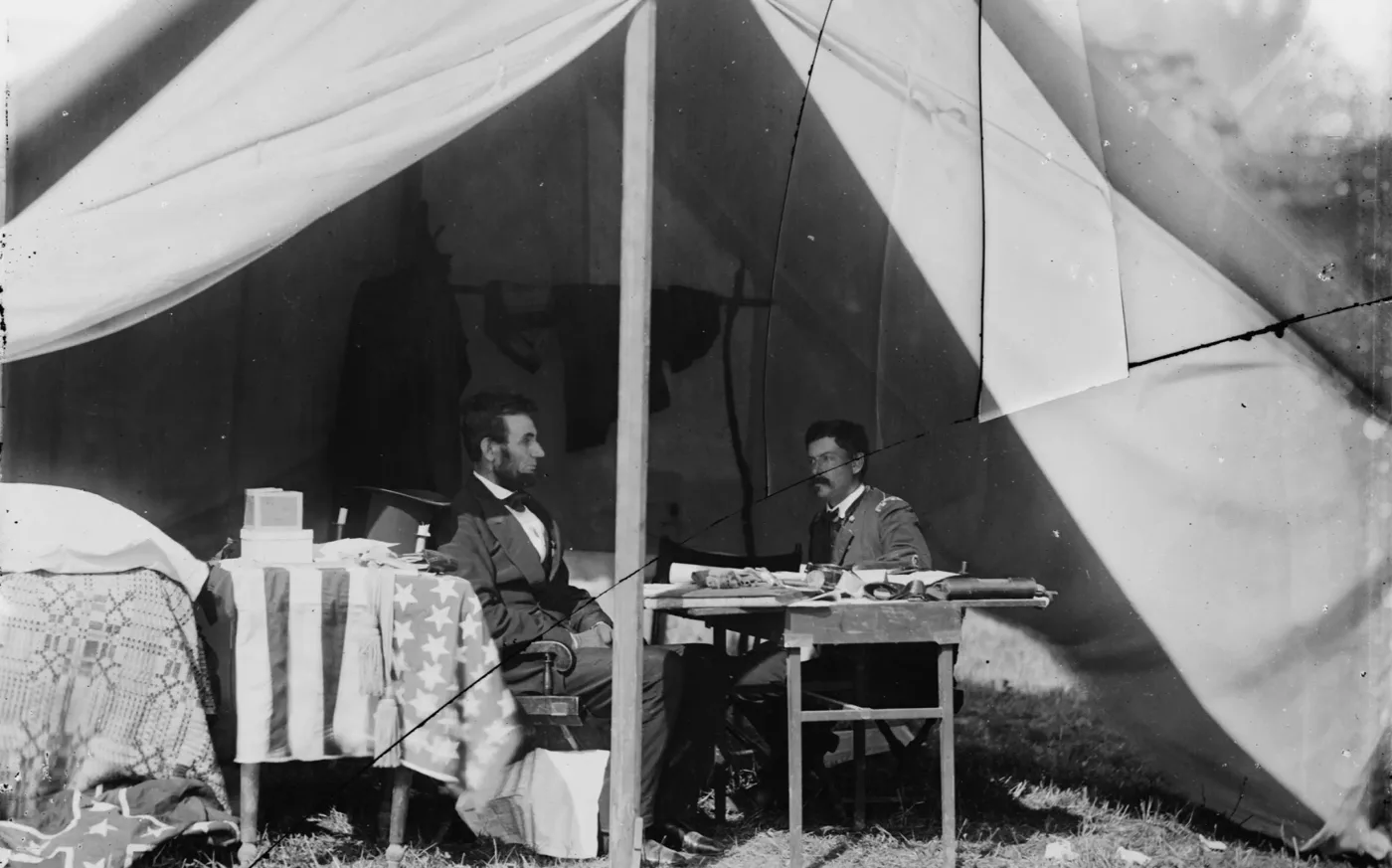
Before inboxes, Lincoln had a hat.
Down to raisins
- Date
- Oct 2026
- Topic(s)
- Artificial Intelligence, Human Interface Design
- Summary
- Abraham Lincoln kept letters and notes in his hat, which made saving them effortless and finding them again risky. In the Civil War telegraph office he read dispatches only until he reached one he’d…
In June 1850, a lawyer in Springfield, Illinois, sat down to apologize for being slow. “I am ashamed of not sooner answering your letter,” he wrote to a colleague named Richard S. Thomas, and then he gave two excuses. The first is the one everybody gives: he’d been very busy in the U.S. court.
The second is better. “When I received the letter I put it in my old hat, and buying a new one the next day, the old one was set aside, and so, the letter lost sight of for a time.”1
The lawyer was Abraham Lincoln, and it’s easy to read that as a man who couldn’t keep track of his mail, but that wasn’t quite it.
Lincoln’s law partner, William Herndon, called the hat “an extraordinary receptacle.” It was, he wrote, “his desk and his memorandum-book.” Lincoln carried his bank-book in it, and most of his letters. When he read something worth keeping, he jotted it on an envelope or a scrap of paper and tucked it into the lining. “Afterwards when the memorandum was needed there was only one place to look for it.”2
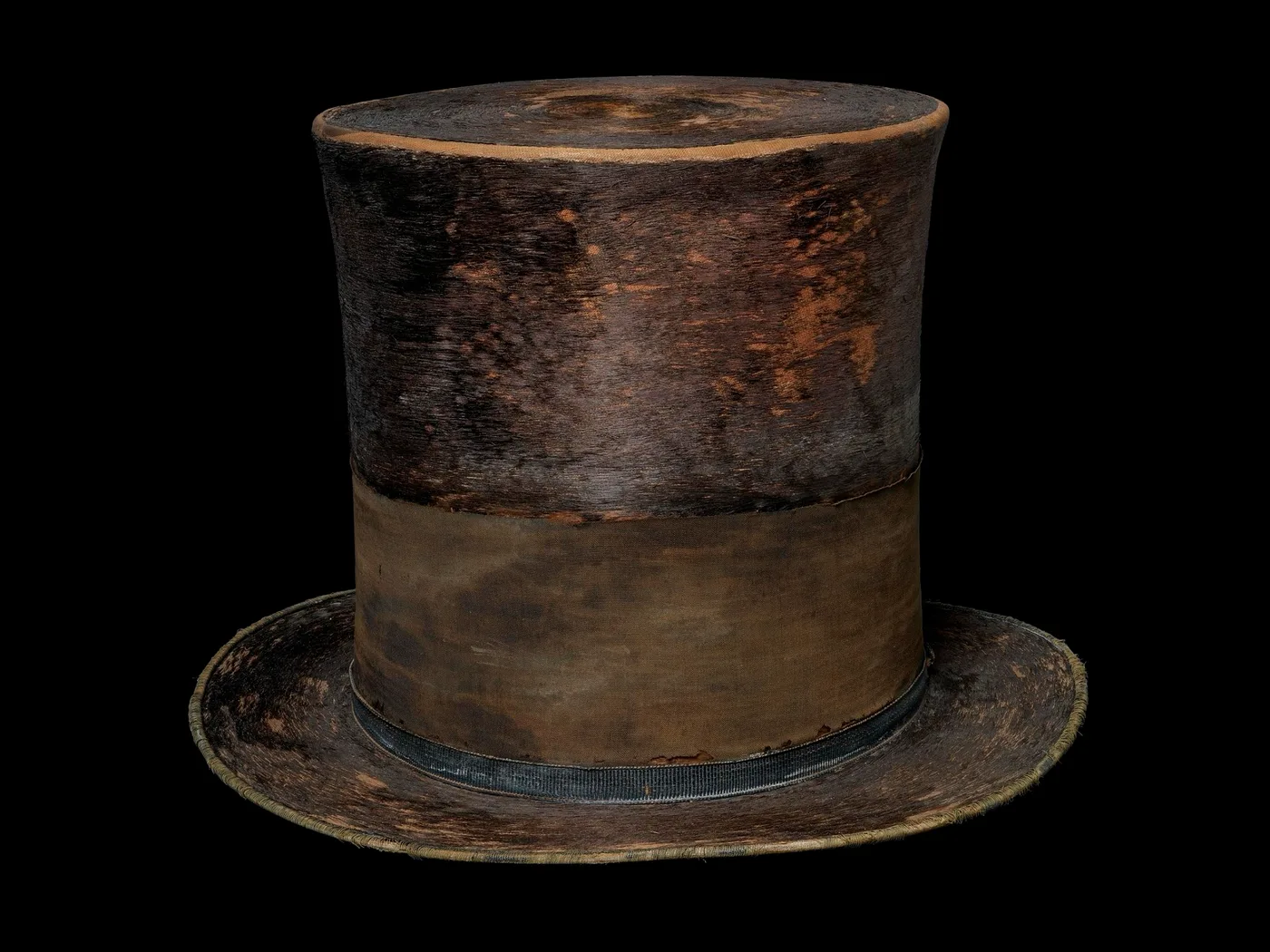
Lincoln’s top hat, the last one he wore, to Ford’s Theatre in 1865.
That last sentence is a pretty good description of a capture tool. There was nothing to file and no folder to pick. Whatever was in front of him went in the hat, and the hat went everywhere he did. Its weakness is the one in the letter to Thomas: the system only works while you’re wearing it. Buy a new hat, and whatever was in the old one is gone.
About a decade later, Lincoln had a much bigger inbox.
During the Civil War, news from the front reached Washington by telegraph, and it arrived at the War Department, next door to the White House. Lincoln walked over constantly. The telegraph office became, as he often told the operators, his haven of rest. Many dispatches came in cipher, and the young men who decoded them got used to the President reading over their shoulders.3
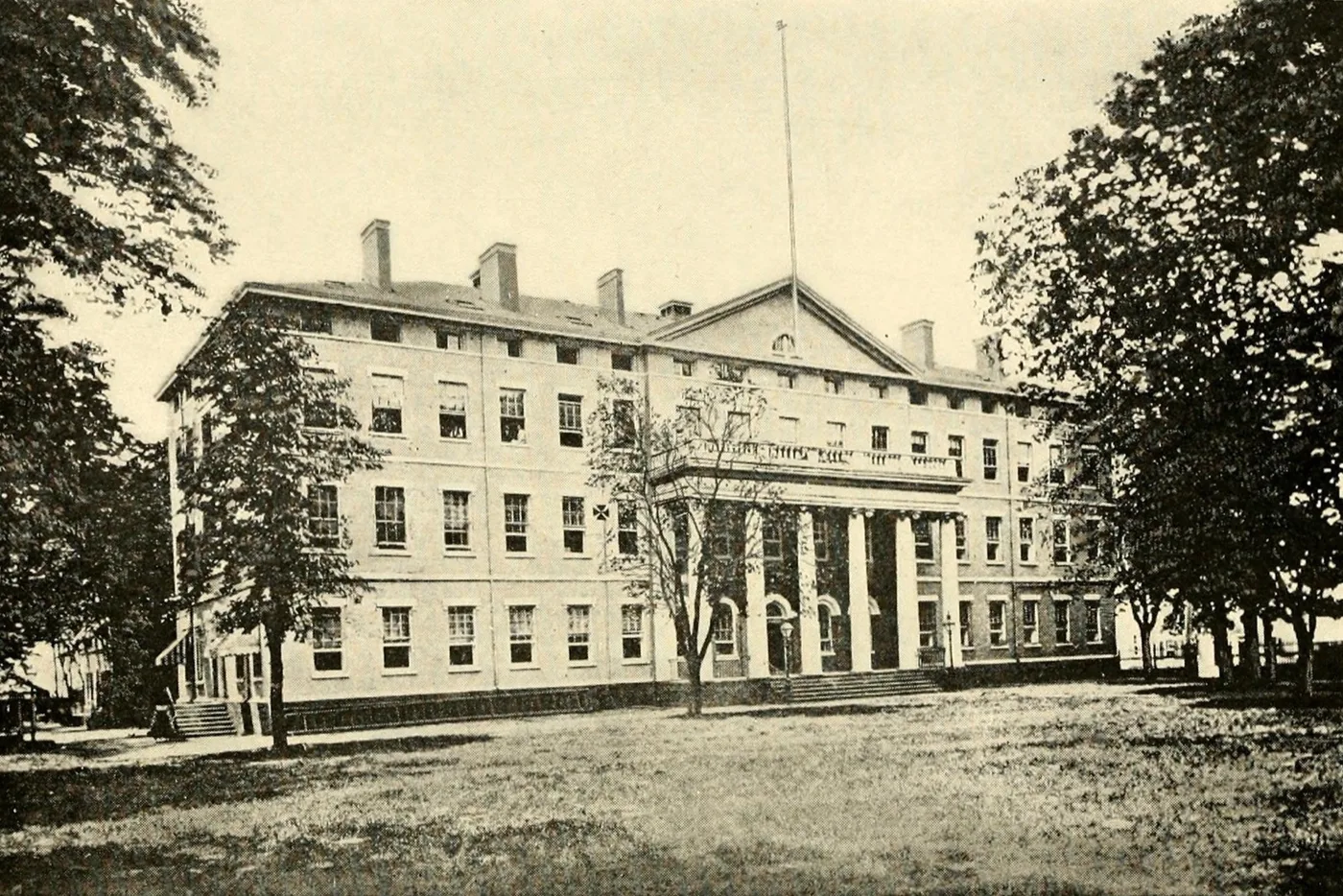
The old War Department building, from Bates’s Lincoln in the Telegraph Office, 1907.
One of them, David Homer Bates, wrote down what Lincoln did when he walked in. Decoded telegrams were filed in the order they arrived, in a little drawer in the cipher-desk. Lincoln went straight to the drawer and read from the top, newest first, until he reached the one he’d seen on his last visit. Then, almost every time, he said, “Well, boys, I am down to raisins.”
Eventually somebody asked what that meant. Lincoln told them about a little girl who celebrated her birthday by eating a great deal of everything, with raisins for dessert. That night she was violently sick. The doctor, inspecting the results, noticed a few small black objects and told her anxious parent the danger was past: the child was down to raisins. “So,” Lincoln said, “when I reach the message in this pile which I saw on my last visit, I know that I need go no further.”4
It’s a gross joke, and a very Lincoln one. It’s also an exact description of a problem anyone with an inbox has. Reading isn’t the hard part. Knowing where to stop is.
I’ve been building a bookmarking tool for myself. Bookmarks is the closest word, though it saves more than links: a song, a jacket, a woodworking video, a screenshot of a chair, a note to myself.
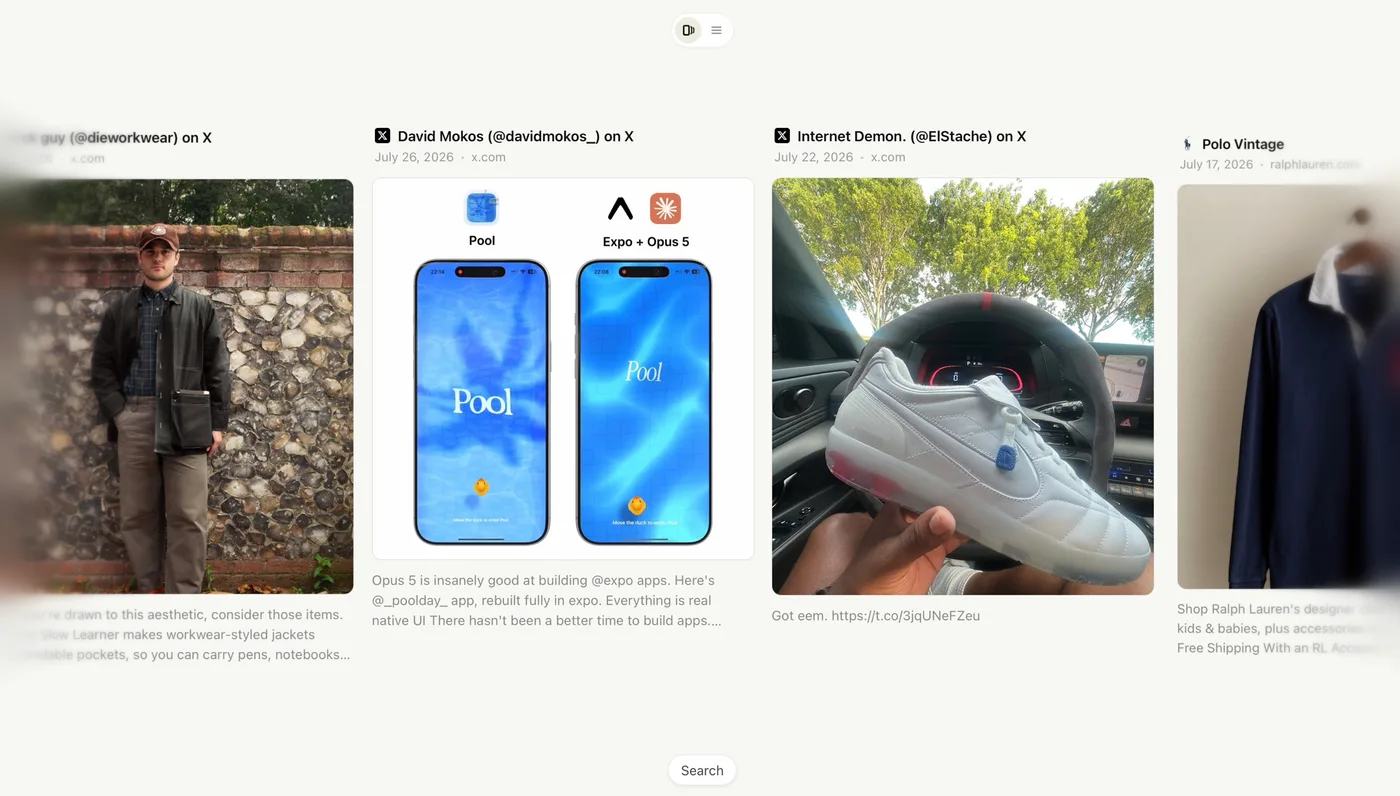
Bookmarks, as a strip of cards.
Saving is the hat. On my phone, an Apple Shortcut sits in the share sheet, so from almost any app I tap Share, pick it, and whatever I’m looking at gets sent off. On my Mac, Raycast does the same. There’s nothing to file and nothing to name. Like Lincoln’s hat lining, there’s only one place it goes.
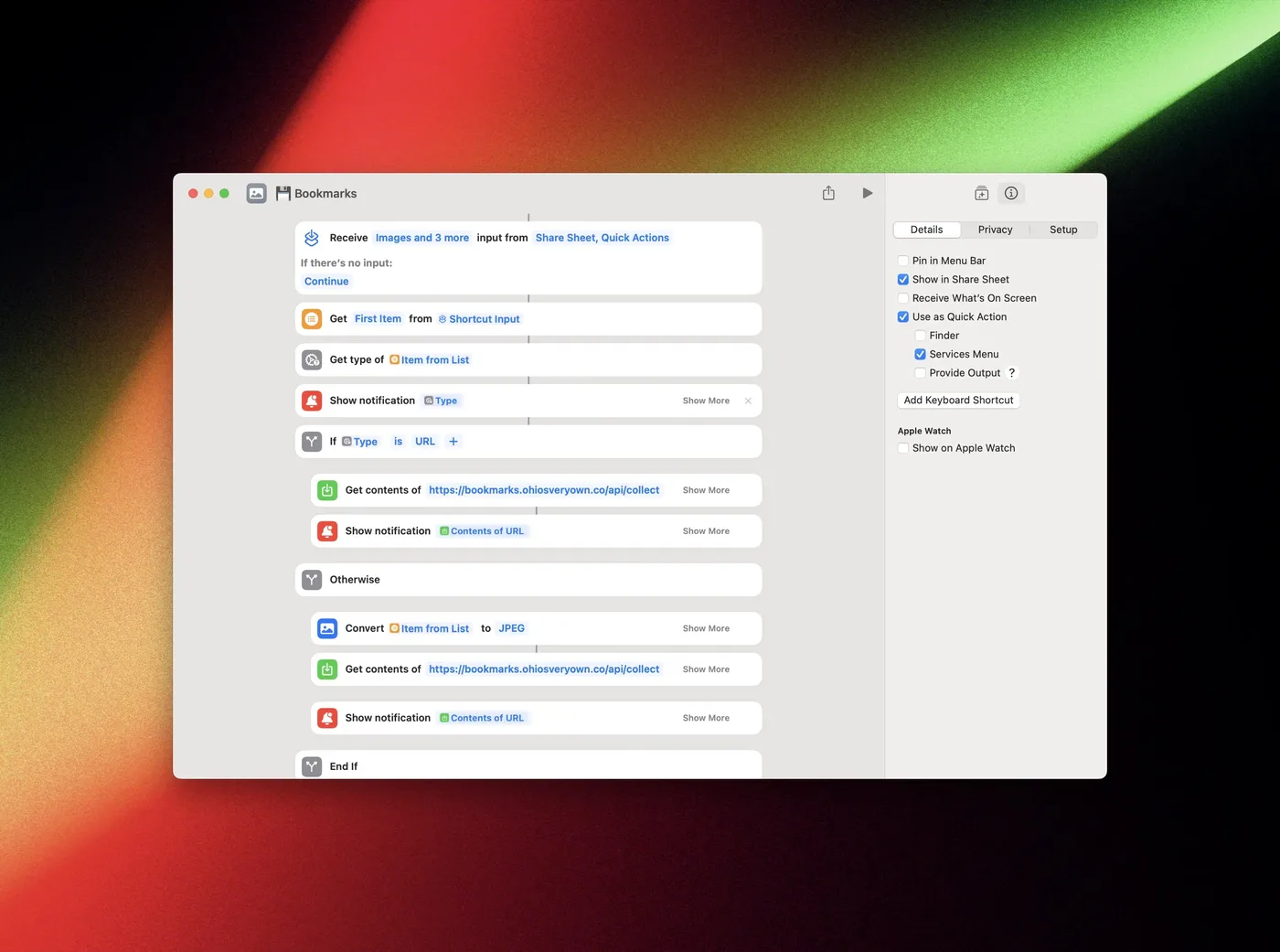
The Shortcut behind the share button.
What arrives is usually raw: a bare URL, or a screenshot with no source. So, like the cipher operators, something translates it before I read it. The app looks up the page’s title, description and preview image. For a YouTube video, Claude reads the transcript and writes a two-line summary. For a screenshot, Claude looks at the picture, gives it a short title and, when it can, finds the page it came from. Then it picks tags from a short list (music, woodworking, design, fashion and a couple of others). Everything ends up as a page in a Notion database, and the images are copied somewhere they won’t vanish when the original site changes.
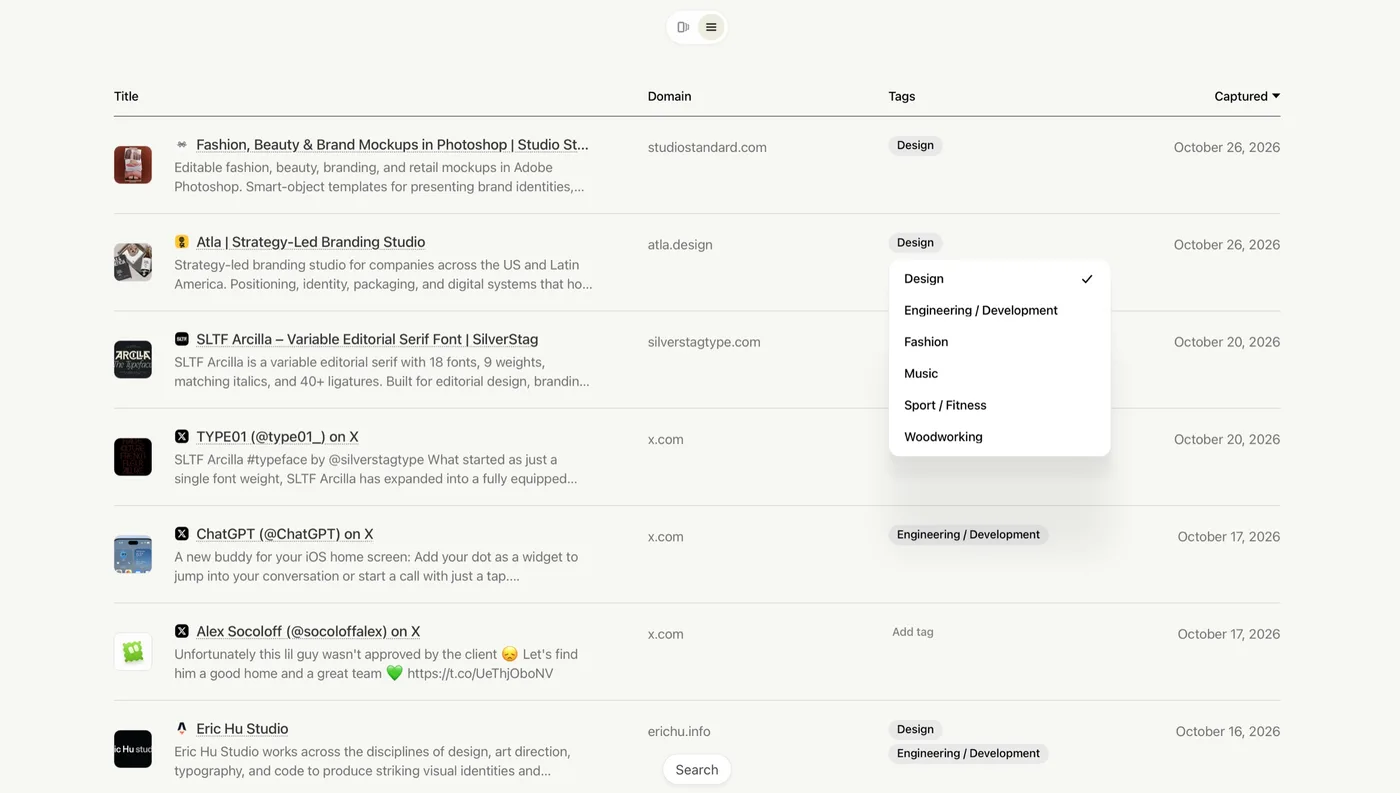
The same saves as a table, with the tag menu open.
When I open it, there’s a small blue dot on everything that came in since my last visit. Above the dot is new. Below it, I’ve already seen. I didn’t know it when I built it, but that dot is the raisins.
Scrolling back through the newest saves.
Somewhere along the way, saving things got very easy. Every app has a share button, and every share button leads somewhere: a reading list, a notes app, a camera roll full of screenshots. For me, that added up to a dozen hats, each holding a few things I meant to look at again.
Lincoln’s two systems split the problem in a useful way. The hat made putting something away cost nothing. The drawer made coming back cost almost nothing, because it told him where to stop. A good tool needs both halves, and most of the ones I’d used only had the first.
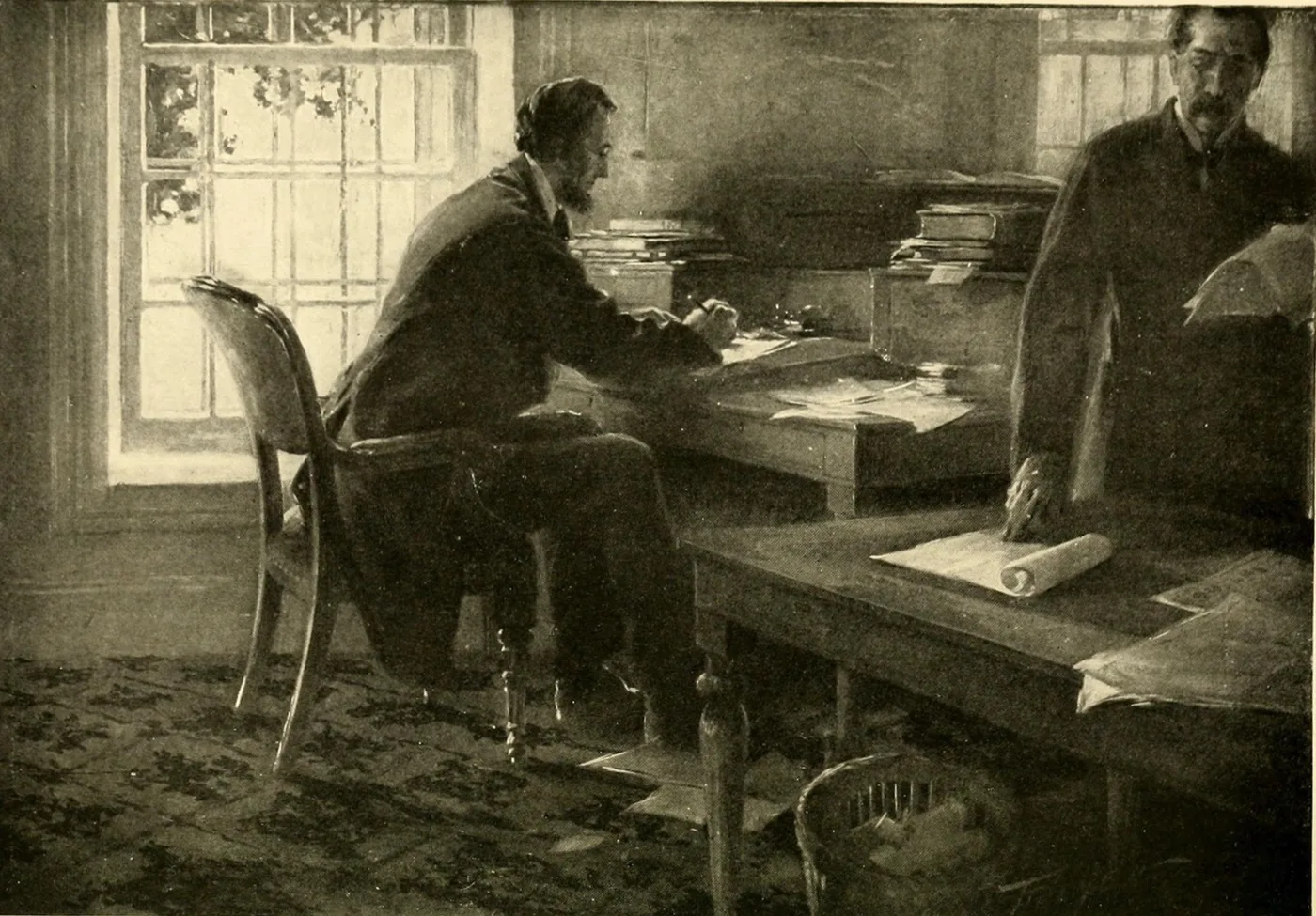
Lincoln in the War Department telegraph office, drawn by C. M. Relyea, 1907.
The operators remembered one more saying. Early in the war, the head of the office, Thomas Eckert, was under orders from General McClellan, who trusted the President with as little news as possible. One day, when Lincoln walked in, Eckert slipped a dispatch under his blotter and said there was nothing on file. Lincoln found out. After that, when he was told there was no news, he would sometimes ask, slyly, “Is there not something under the blotter?”5
My app has a blotter too. It only shows the newest hundred things I’ve saved, and everything older sits out of sight in Notion. Most days I’m down to raisins long before I get anywhere near it.
Search with suggested prompts.
Footnotes
1Abraham Lincoln to Richard S. Thomas, June 27, 1850, Papers of Abraham Lincoln (papersofabrahamlincoln.org); also in Roy P. Basler, ed., The Collected Works of Abraham Lincoln, vol. 2, 80–81.
2The hat as desk and memorandum book: William H. Herndon and Jesse W. Weik, Herndon’s Lincoln: The True Story of a Great Life (1889), the chapter on Lincoln’s law practice.
3Lincoln’s visits and the cipher-room: David Homer Bates, Lincoln in the Telegraph Office (The Century Co., 1907), 40–42.
4“Down to raisins”: Bates, Lincoln in the Telegraph Office, 41.
5The blotter, Eckert and McClellan: Bates, Lincoln in the Telegraph Office, 94–96.
The ideas and opinions in this post are mine. Claude helps with research.