



In 2009, a one-line iTunes update started a fight between two phones. The AI labs are having it again.
Everybody swipes
- Date
- Oct 2026
- Topic(s)
- Writing, Artificial Intelligence
- Summary
- In 2009, the Palm Pre out-designed the iPhone in plenty of ways and still lost, after Apple shut it out of iTunes. Its best ideas, like swipeable app cards, ended up everywhere. OpenAI and Anthropic…
On July 15, 2009, Apple put out a small iTunes update. Version 8.2.1 came with one of the driest release notes ever written. It fixed, Apple said, “an issue with verification of Apple devices.”1
For six weeks a certain phone had been plugging into iTunes and introducing itself as an iPod, sending Apple’s own vendor ID. iTunes believed it, and music and photos synced right over.1
That phone was the Palm Pre.
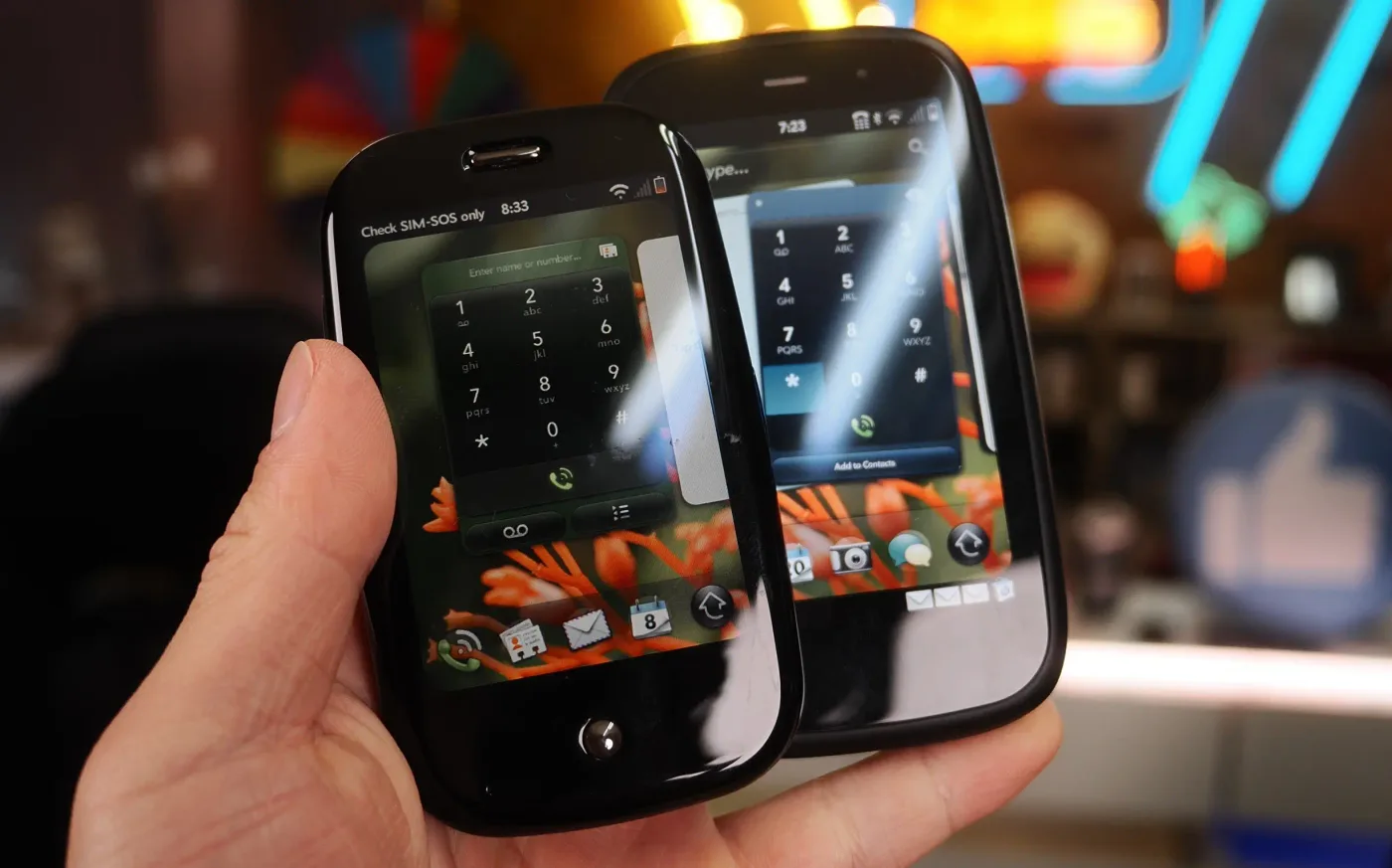
The Pre was the closest anyone came, early on, to beating the iPhone at its own game. Palm showed it at CES in January 2009 and won Best in Show. The man on stage, Jon Rubinstein, had helped build the iPod at Apple before he left to run Palm.2
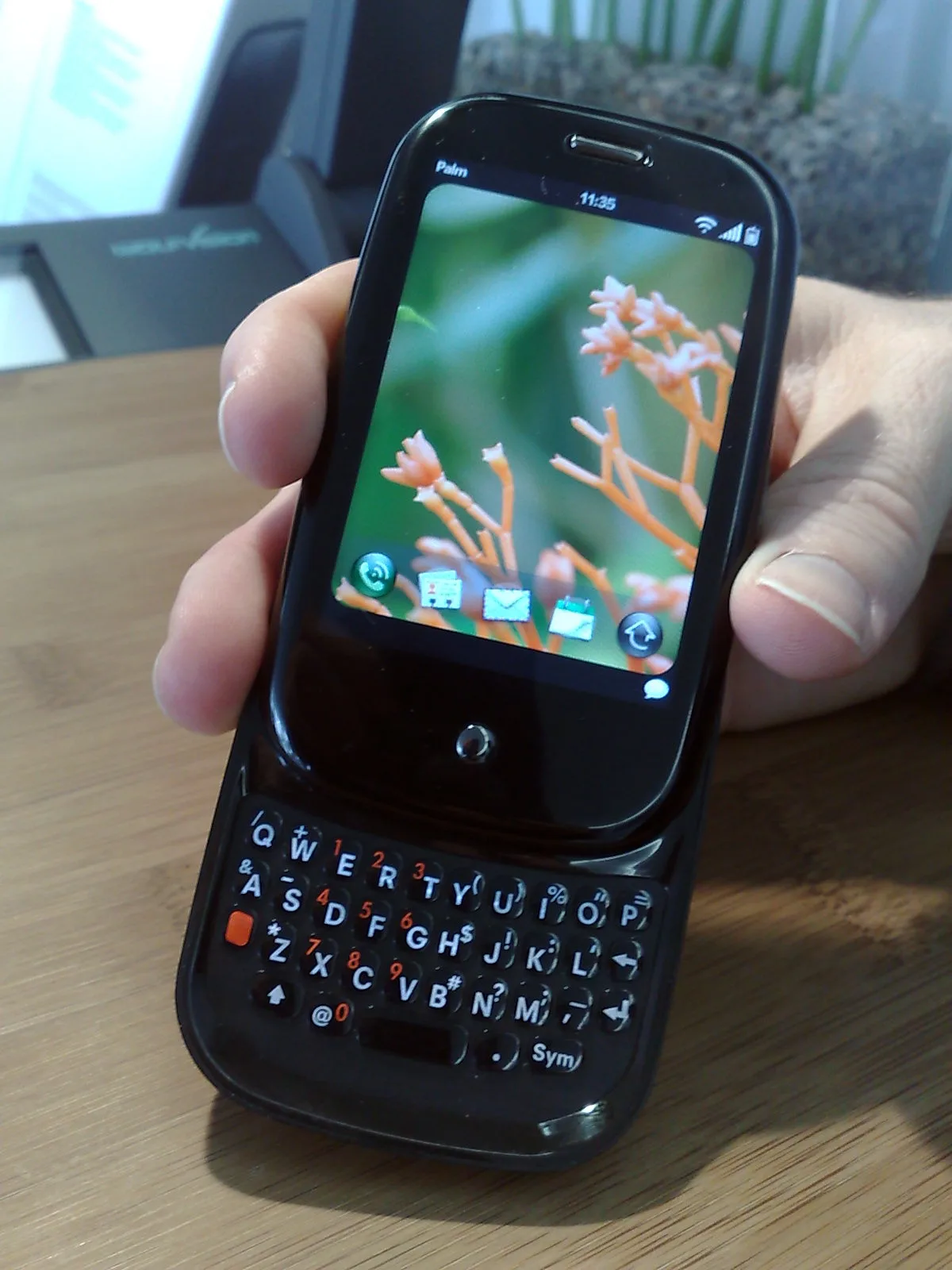
A Pre at Mobile World Congress, February 2009. Photo: James Whatley, CC BY 2.0.
What he showed was genuinely new. Apps on webOS lived on cards you could fan out, flick between and throw off the top of the screen to close. Notifications slid in along the bottom without stopping what you were doing. Your contacts from Google, Facebook and work merged into one list on their own. The iPhone, at the time, couldn’t keep two of your own apps running at once.
On a spec sheet, it won outright. Next to the iPhone 3G, the Pre had a keyboard that slid out, a better camera with a flash, and copy and paste and search across the whole phone, which the iPhone wouldn’t get until a software update that summer. After a rebate, it cost the same $199.2
I owned the first Pre and was completely “Pre-pilled”. The UI felt genuinely novel, and the hardware was lovely. webOS is part of the reason I became interested in human interface and software design.
The Pre went on sale June 6, 2009, two days before Apple’s developer conference. It became the fastest-selling phone in Sprint’s history.2 Then came the iTunes trick, and Apple’s update, and Palm’s update to get around Apple’s update. Palm complained to the group that hands out USB vendor IDs. In September, the group sided with Apple and told Palm to stop using Apple’s number.3 By then the fight was about who got to say what a device was, and Palm wasn’t going to win it.
That trick is how I loaded music onto my Pre, right up until the day it was patched and I couldn’t. It felt a little gray at the time, but clever. Palm had hacked the system.
From there, things continued to go downhill. HP bought Palm for $1.2 billion in 2010. On August 18, 2011, it gave up on webOS hardware entirely. The Palm TouchPad tablet had been on sale for just 49 days. Marked down to $99, the leftover stock sold out almost immediately.4
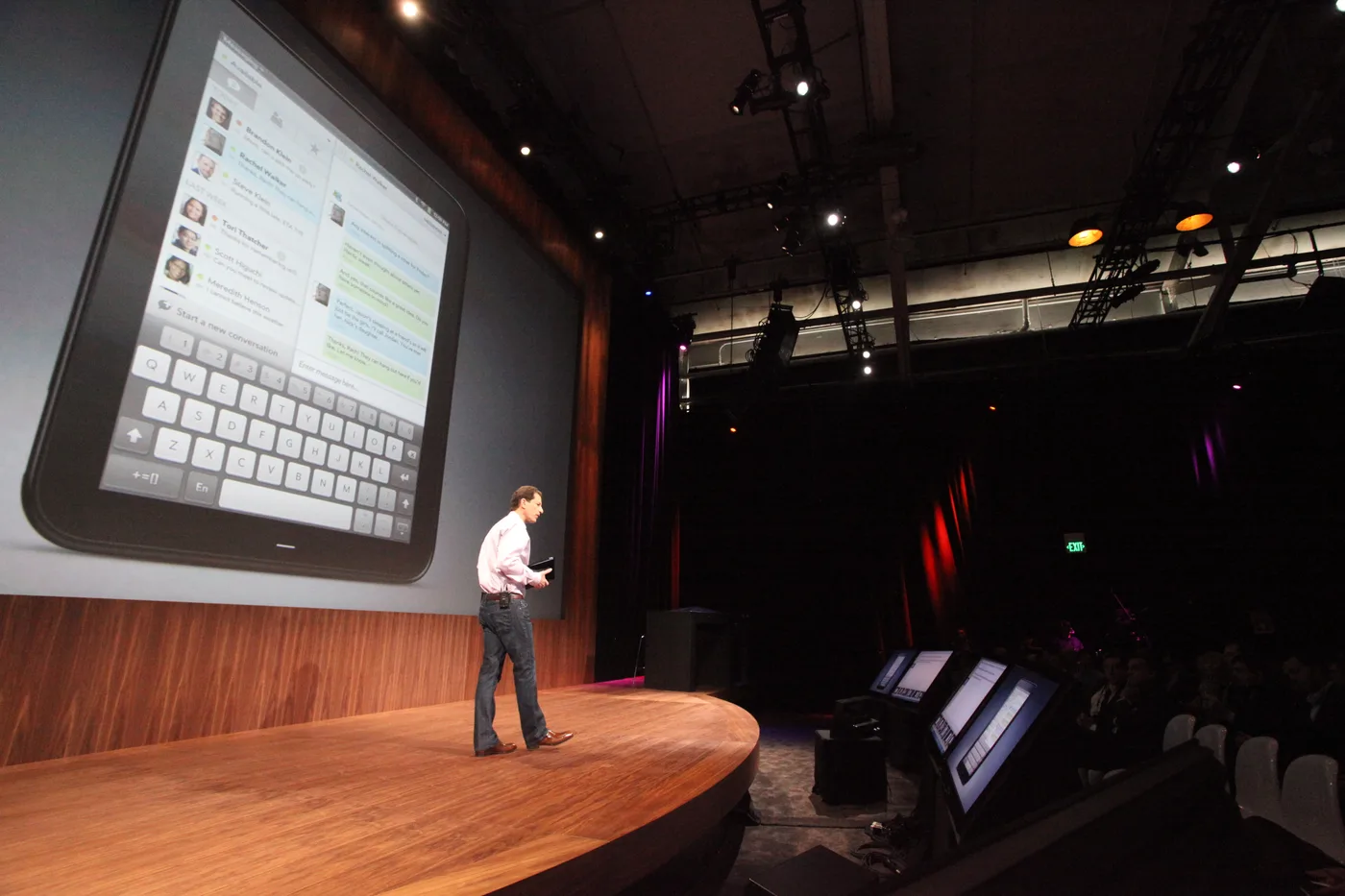
Jon Rubinstein introducing the HP TouchPad, February 9, 2011. Photo: Robert Scoble, CC BY 2.0.

A Best Buy still advertising the TouchPad on August 21, 2011, three days after HP stopped making it. Photo: True Tech Talk Time, CC BY-SA 3.0.
There’s an old story about this kind of thing. In the 1999 TV movie Pirates of Silicon Valley, Bill Gates answers Steve Jobs’s accusation of theft with a line people still repeat: they both had a rich neighbor named Xerox, and Jobs had just gotten there first. It’s a dramatization, but it’s the most honest description of the industry I know. Everybody takes from somebody.
The Pre lost, and then everyone took from it. Matías Duarte, who led the design of webOS, went to Google to work on Android.5 Within a few years, the swipeable app cards showed up on Android, on Windows Phone (remember that?) and on the iPhone, and none of them called it webOS.
Here’s why I’ve been thinking about a dead phone.
In 2021, a group of researchers left OpenAI and started Anthropic.6 Like Rubinstein, they knew the company they were leaving, and they thought they could build something better. Today they make Claude, and OpenAI makes ChatGPT, and the two have spent the last few years shipping very similar things very quickly.
You’d expect the company in Apple’s position to be the one locking the door. In this story, it went the other way. In August 2025, Anthropic cut off OpenAI’s access to Claude, saying OpenAI staff had been using Claude Code ahead of their own GPT-5 launch, against its terms of service. Anthropic’s explanation was its own small masterpiece of dry: “heavy usage of Claude Code among OAI tech staff.” OpenAI said what it had been doing was industry standard.7
Then the Super Bowl. In February 2026, weeks after OpenAI said it would start testing ads in ChatGPT, Anthropic bought commercials whose tagline was “Ads are coming to AI. But not to Claude.” Sam Altman said he laughed, and also called the ads “clearly dishonest.”8 If that sounds familiar, it should. Apple introduced the Macintosh in a Super Bowl ad in 1984, and the joke there was also about the other guy.9
I use both, though I lean toward Claude, mostly because of a “don’t be evil” feeling I have about Anthropic compared with OpenAI that, honestly, is unfounded.
I think about this kind of competition a lot, and not just with AI. Most competition in software is just re-skinning features. I don’t find that annoying, but I do think the novelty of artificial intelligence masks what’s actually happening.
I don’t think either company is Palm. Both are huge, and one of them doesn’t need to win for the other to lose. But the Pre is a useful thing to remember when you’re watching two companies fight over who gets to use whose product. The fights that make the news are about access: a vendor ID, an API key, a Super Bowl slot. The part that lasts is quieter.
In the end, the iPhone won. Nobody disputes that. But open the app switcher on one today and you’ll find a row of cards you can swipe up and away, and they came from a phone that lost.
The card metaphor was really clever, and it’s ubiquitous even today. But what I appreciated most was how the whole system was designed. Apps and data lived on the device, but they cut across one another. I think about that a lot as a product designer, especially at the principal level: how work cuts across features and teams.
Software moves so fast, especially now. The visual language will always change and evolve, so I try to think about principles and platforms that have longevity. Those are usually the things with the most impact, too.
That’s why a 2009 phone fight still matters to me. The UI will change and evolve, but the core principles last. Nobody remembers iTunes 8.2.1, but everybody still swipes.
Footnotes
1iTunes 8.2.1 and the Pre’s use of Apple’s vendor ID: MacRumors, “iTunes 8.2.1 Reportedly Breaks Palm Pre Syncing,” July 15, 2009.
2The Pre’s CES debut, Rubinstein’s background and the Sprint launch: “Palm Pre,” Wikipedia; NBC News, “Fans gather for ‘iPhone killer’ Palm Pre launch,” June 2009.
3The USB-IF ruling: John Paczkowski, “USB Standards Group: Okay for Apple’s iTunes to Block Palm Pre,” AllThingsD, September 22, 2009.
4HP’s purchase of Palm and the end of webOS hardware: Brian Caulfield, “Wait, What? HP Kills WebOS Devices, TouchPad,” Forbes, August 18, 2011.
5Duarte’s move to Google: “Matías Duarte,” Wikipedia, citing The Wall Street Journal, 2010.
6Anthropic’s founding: “Anthropic,” Wikipedia.
7Anthropic cutting off OpenAI’s access: TechCrunch, “Anthropic cuts off OpenAI’s access to its Claude models,” August 2, 2025, following reporting by Wired.
8The Super Bowl ads and Altman’s response: CNBC, “Super Bowl AI ad spat: Altman lashes out at Anthropic campaign,” February 5, 2026.
9Apple’s “1984” ad, Super Bowl XVIII, January 22, 1984: Mental Floss, “How Apple’s 1984 Super Bowl Ad Was Almost Canceled.”
The ideas and opinions in this post are mine. Claude helps with research.