
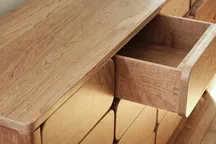


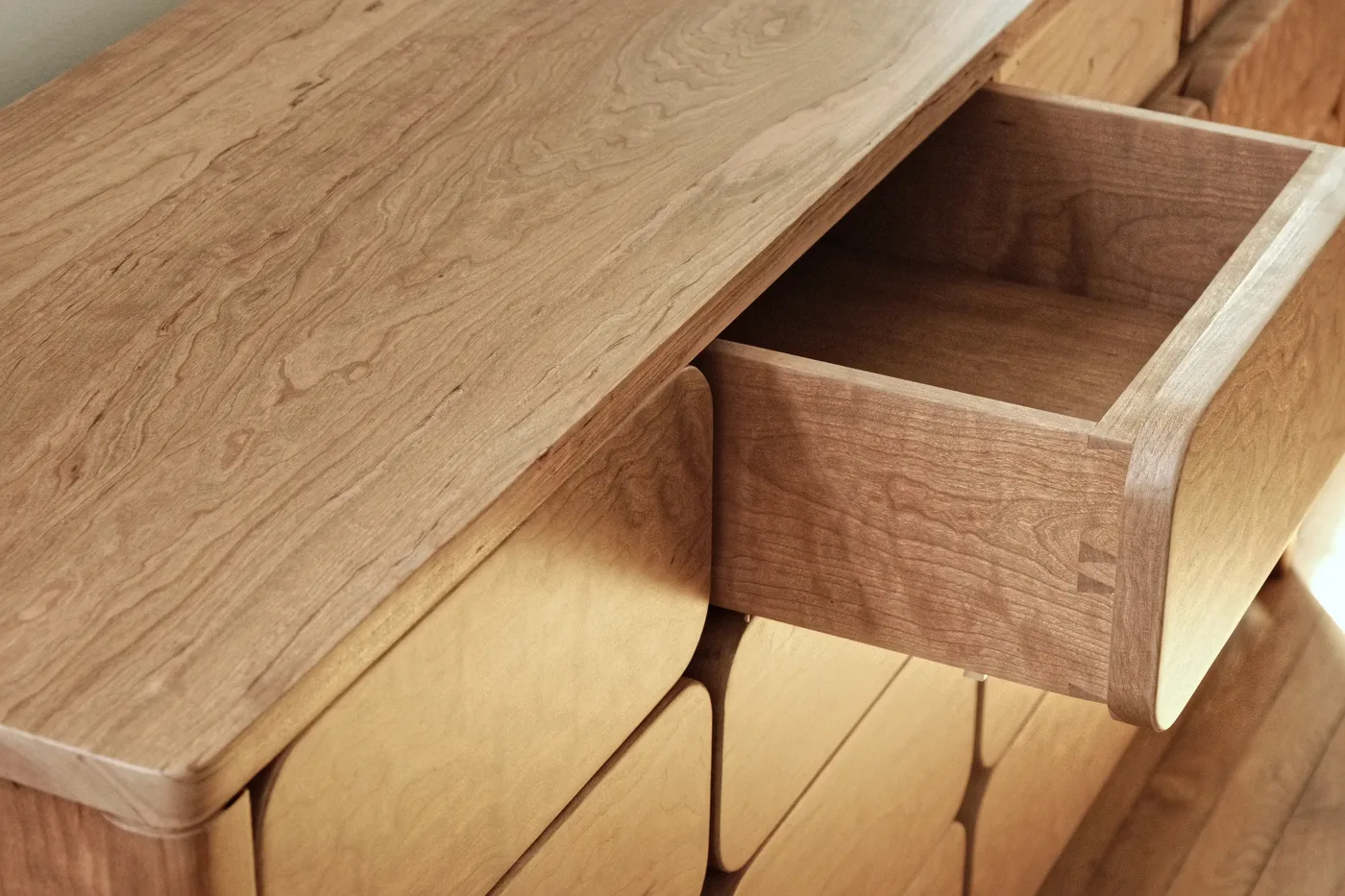
Proportional Design is a small furniture studio in Atlanta, Georgia, building functional objects from sustainable materials since 2016.
proportional.design
- Date
- 2016 – Present
- Topic(s)
- Woodworking
- Summary
- Thomas Jefferson wrote the Declaration of Independence on a portable desk he designed and a Philadelphia cabinetmaker built, and fifty years later he left a note under its lid saying who made it…
In the 2004 all-time classic National Treasure, Nicolas Cage steals the Declaration of Independence because he believes it contains a treasure map written in invisible ink on the back.
Believe it or not, there really is writing on the back of the Declaration, except it’s just not that interesting. Upside down along the bottom edge, it says “Original Declaration of Independence dated 4th July 1776.”1 It’s a label, probably added while the parchment spent its early years rolled up, so someone could tell what it was without unrolling it.
If you’re looking for a hidden note from a founding father though, there is one. It just isn’t on the parchment. It’s tucked under the lid of a piece of furniture.
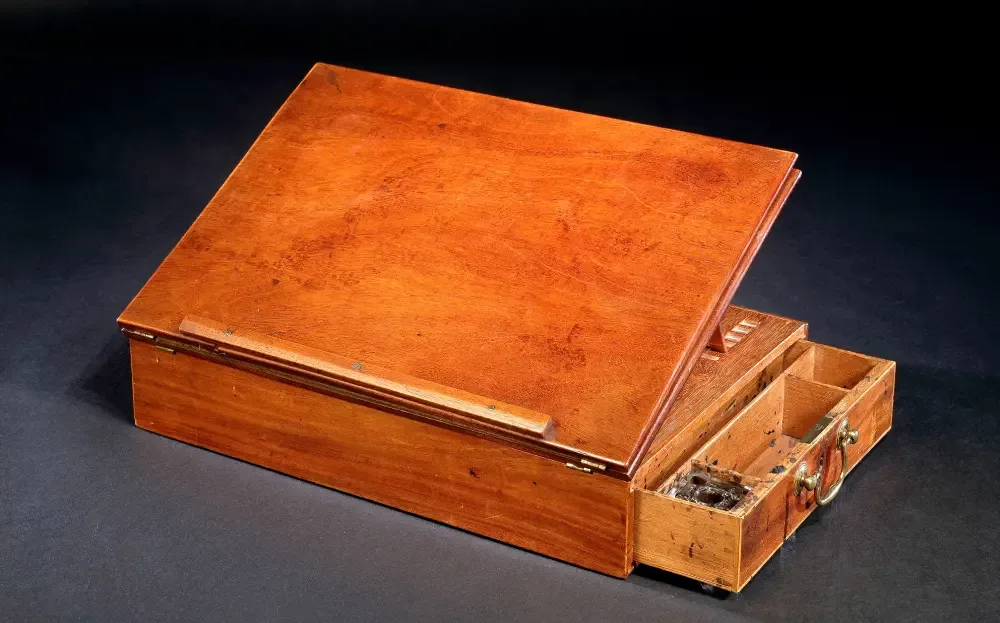
Thomas Jefferson’s writing desk, made by Benjamin Randolph in Philadelphia, 1776.
When Jefferson came back to Philadelphia in May 1776, he took rooms with Benjamin Randolph, a prominent cabinetmaker.2 Jefferson drew up a portable desk, and Randolph built it: a mahogany box about the size of a laptop, with a locking drawer for paper, pens and an inkwell, and a hinged writing board covered in baize.3 That summer, Congress asked Jefferson to draft a declaration. He wrote it on the box.
He kept using it for the next fifty years, as a diplomat and as president. Then, in 1825, his granddaughter Ellen married Joseph Coolidge of Boston. Her belongings were shipped north, but the ship went down. Among her belongings was a writing desk made for her by John Hemmings, an enslaved joiner at Monticello.4
So Jefferson, now 82, sent his own writing box instead. Under the writing board, he attached a note:
“Th: Jefferson gives this Writing desk to Joseph Coolidge junr as a Memorial of affection. it was made from a drawing of his own, by Ben Randall, cabinet maker of Philadelphia, with whom he first lodged on his arrival in that city in May 1776. and is the identical one on which he wrote the Declaration of Independance. Politics, as well as Religion, has it’s superstitions. these, gaining strength with time, may, one day, give imaginary value to this relic, for it’s association with the birth of the Great charter of our Independance.”5
At first it reads like a famous man labeling his own memorabilia. Read it again and he’s doing two things at once.
The first half is a provenance, the record every museum wants: who designed it, who built it, where, and when. (He even got his old landlord’s name slightly wrong.) The second half makes fun of the whole idea. The value, he says, is imaginary, a superstition, and he’s sure people will fall for it anyway.
A letter he sent a few days earlier went further. If Coolidge lived another half-century, Jefferson wrote, he might see the desk “carried in the procession of our nation’s birthday, as the relics of the Saints are in those of the Church.”6
The Coolidge family gave the desk to the United States in 1880. Today it’s at the Smithsonian’s National Museum of American History.7
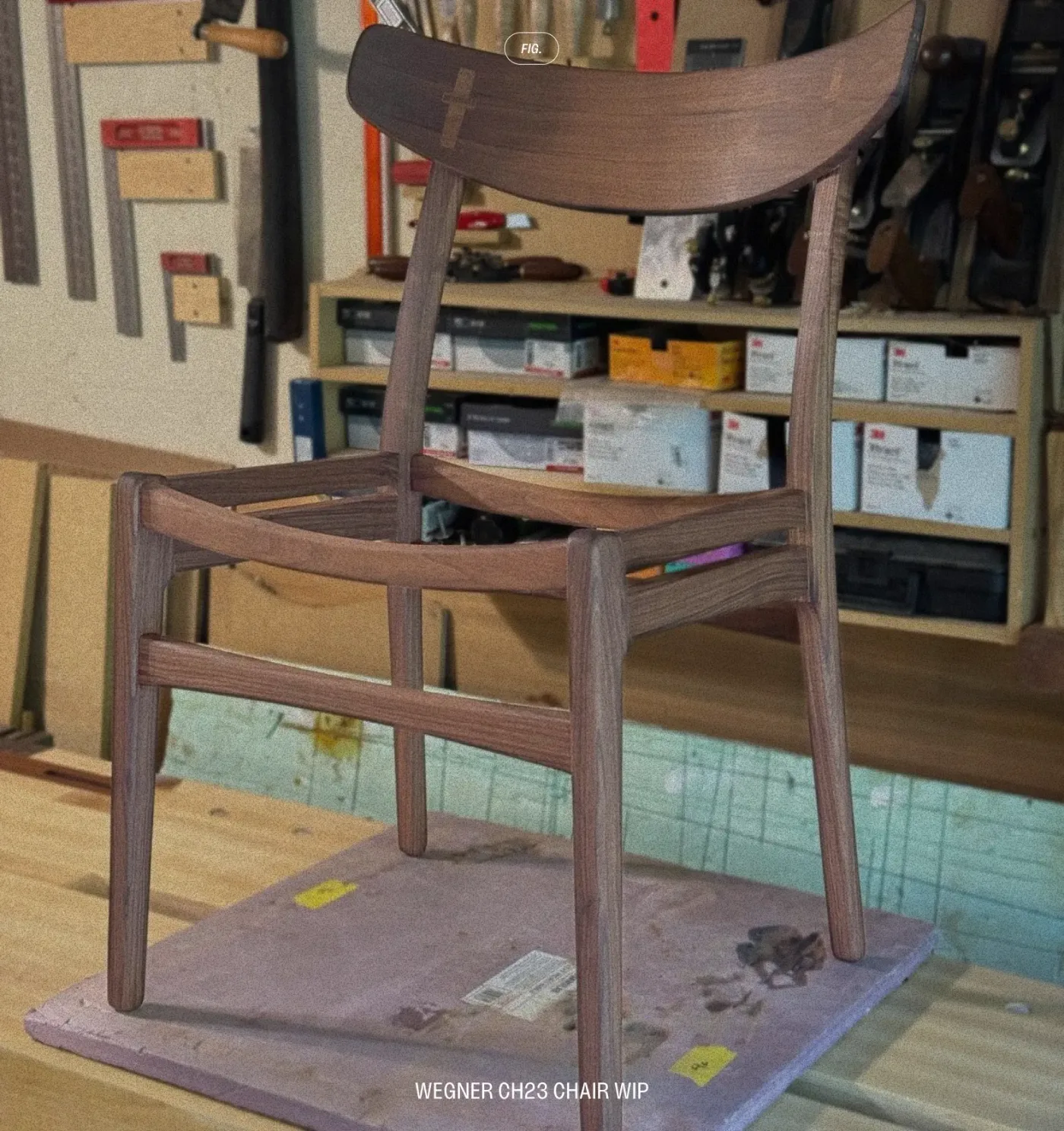
Outside of my day job, I design and build furniture. My studio Proportional Design started in my grandfather’s small basement shop, where I spent my childhood following him around. Since 2016 it’s been a full business in Atlanta, building dining tables and chairs, entry doors and cabinets.
The part of Jefferson’s desk that’s interesting to me isn’t the Declaration, it’s the first half of the note. One person drew it, another built it, and the only reason we know either of them is that somebody wrote it down.
Most furniture makers never did. A few 18th-century makers pasted labels inside their work; one of John Townsend’s, in a Newport chest, reads “Made by John Townsend, Rhode Island, 1765.”8 Most pieces from the period have no mark at all, which is why working out who made them is still detective work.
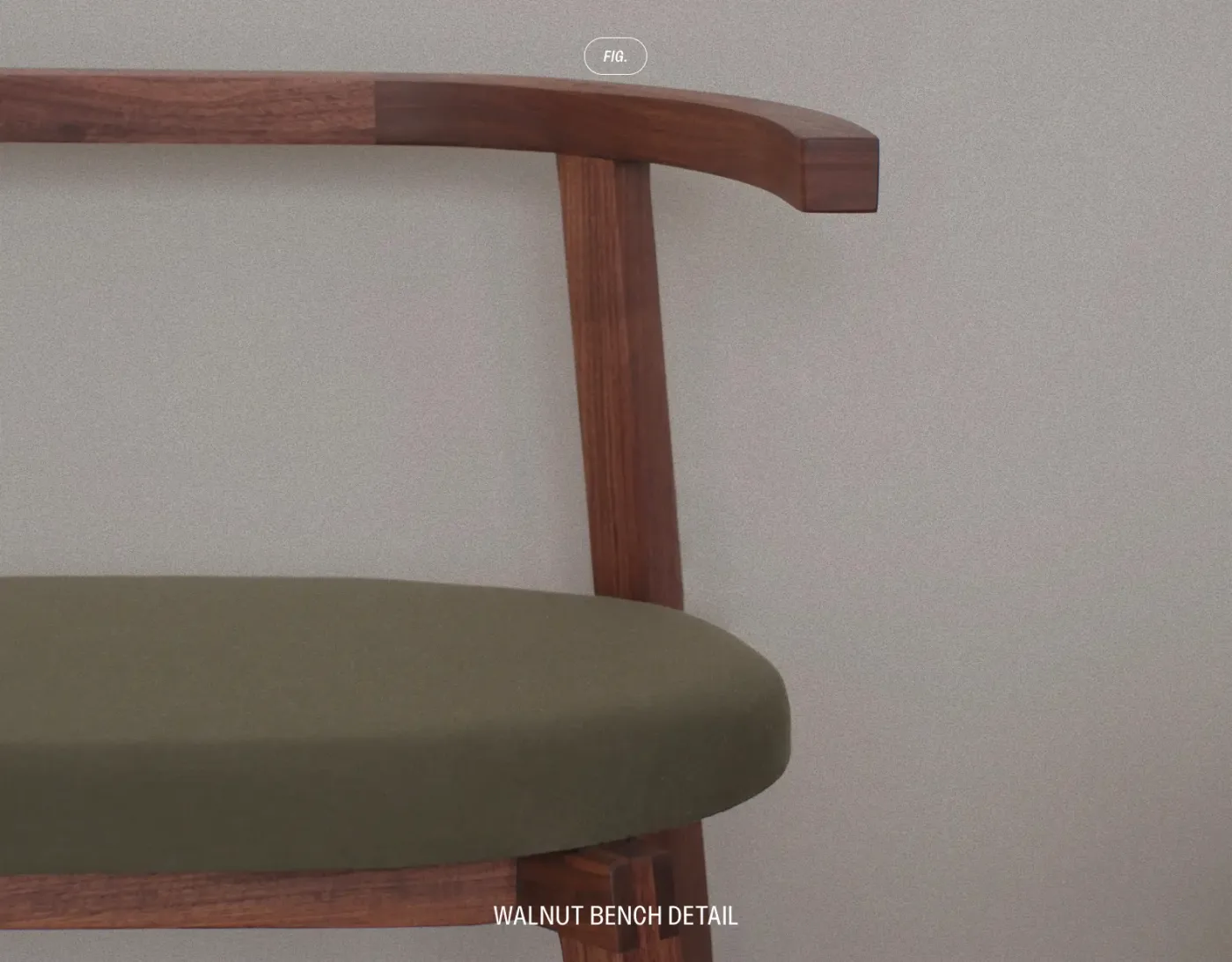
Keeping the record
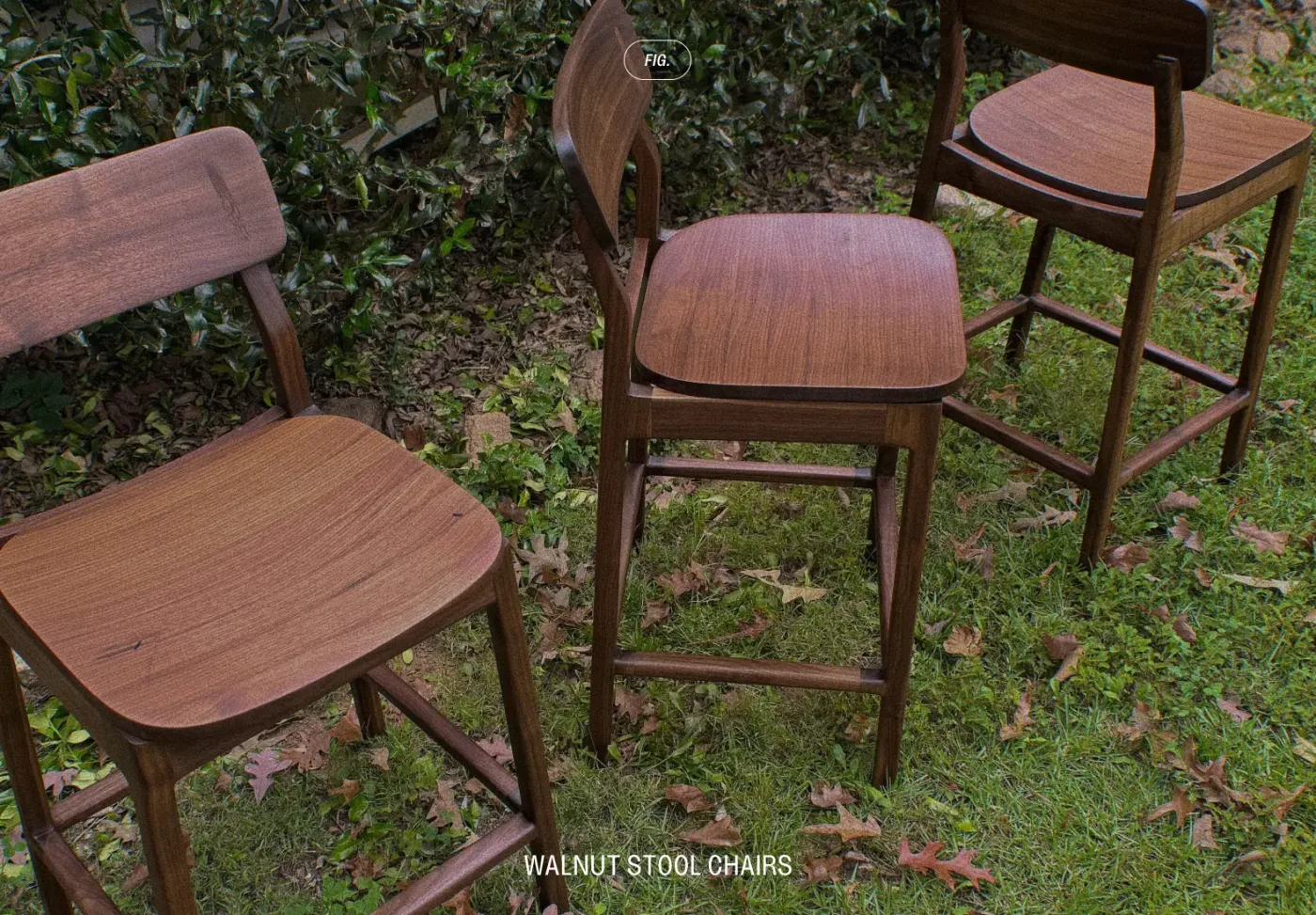
Every piece I make gets its own record on the site: a story, a running set of in-progress photos posted while the piece is still on the bench. There’s no admin panel. New work goes up from wherever I am: a Share Sheet shortcut on my phone when I’m in the shop, or a Raycast command on my Mac.
Both send photos to the same small upload API. Each one can go to the gallery, to a story, or both, with an optional caption and tags. Picking a story pulls the current list from the site, so either device can add to one the other started.
On the way in, every photo is converted to WebP and dated from its own metadata, then stored in Cloudinary. Gallery photos are tagged automatically by Claude, choosing only from tags I already use, so the vocabulary stays tidy. The site itself is Nuxt on Vercel and loads the photos live, so a new upload shows up without a redeploy.
You can follow along on the site or on IG, or get in touch for a project.
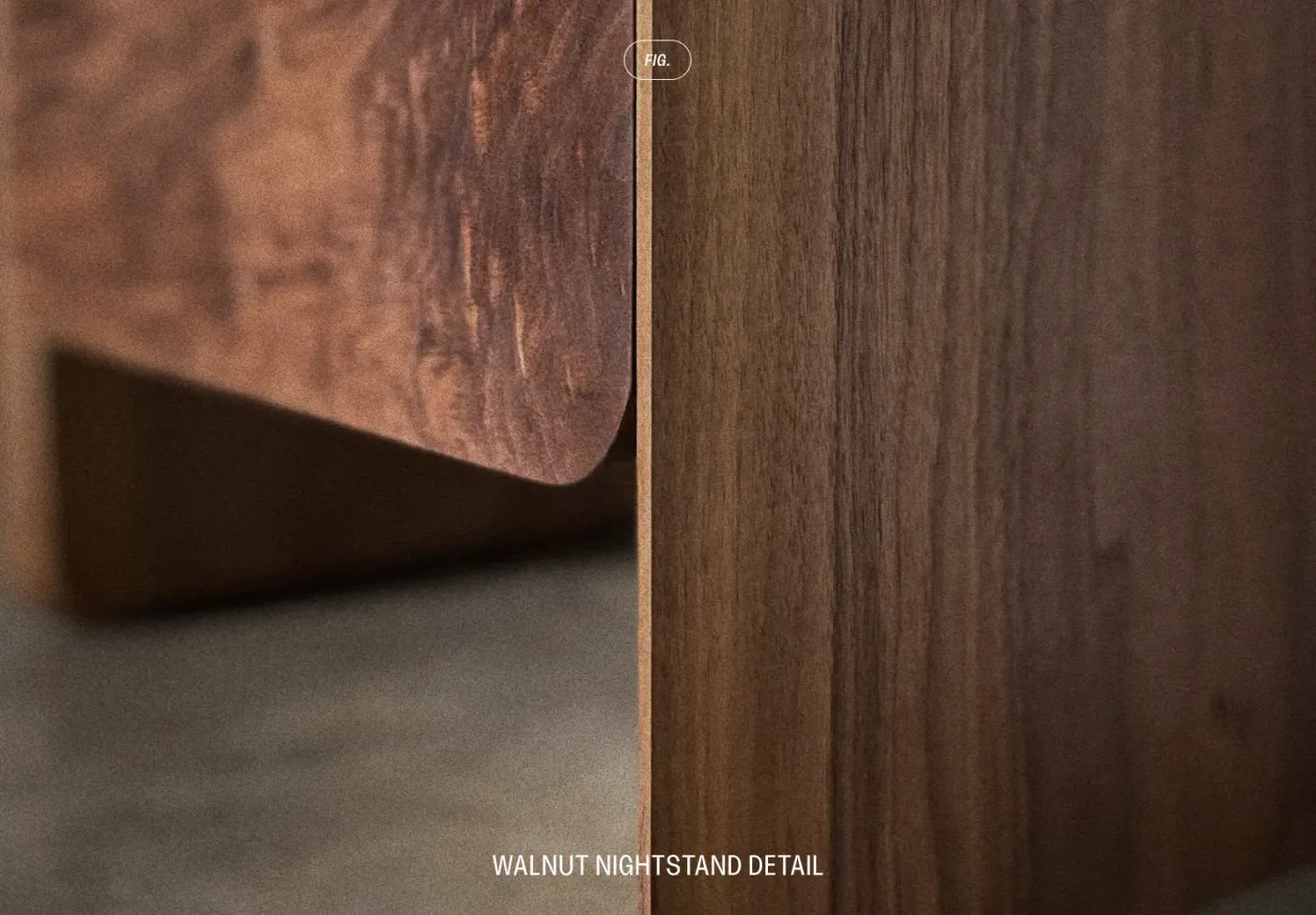
No invisible ink, no map. Just who drew it, who built it, and when. It’s still the best thing you can leave with a piece of furniture.
Footnotes
1Inscription on the back of the Declaration: National Archives, Archivist’s remarks, July 4, 2015.
2Jefferson lodging with Randolph: Monticello, Thomas Jefferson Encyclopedia, “Declaration of Independence Desk.”
3The desk’s design, materials and features, and the note’s placement under the writing board: Smithsonian National Museum of American History, “Declaration of Independence Desk” (PL.031819).
4Ellen Coolidge’s lost desk, made by John Hemmings: Monticello, “Declaration of Independence Desk.”
5Jefferson to Joseph Coolidge, November 18, 1825, as transcribed by Monticello, with Jefferson’s spelling kept.
6Jefferson to Ellen Randolph Coolidge, November 14, 1825, as quoted by the Smithsonian National Museum of American History, “Declaration of Independence Desk.”
7The Coolidge family’s gift in April 1880, and the desk’s home today: Smithsonian National Museum of American History, “Declaration of Independence Desk.”
8Townsend’s label: The Metropolitan Museum of Art, “John Townsend (1733–1809),” Heilbrunn Timeline of Art History. Labeled furniture being rare: Philip D. Zimmerman, “Early American Furniture Makers’ Marks,” American Furniture (Chipstone, 2007).
The ideas and opinions in this post are mine. Claude helps with research.