





What happens when machines take over skilled work? The 1800s might be able to tell us.
Appendages of the machine
- Date
- Oct 2026
- Topic(s)
- Artificial Intelligence
- Summary
- In the 1840s, power looms turned skilled handloom weavers into machine minders, and Marx and Engels described the worker as an appendage of the machine. Read closely, their sentence blames machinery…
A new technology is changing how work gets done.
It’s the result of a perfect storm: one part technical breakthrough, one part flood of investment, and one part companies racing each other so they aren’t left behind. The people building it promise abundance. The people whose work it touches aren’t so sure.
For the skilled, it’s a strange time. A craft that took years to learn can now be matched by a machine and someone with a few weeks of practice. Output is soaring, and so are profits. The new job isn’t really making things. It’s just feeding the machine, watching it run, and stepping in when it gets something wrong.
The people doing the work have a particular mood. They talk about what the job used to feel like, when you started with nothing and ended with something that was yours. A few of them are angry. Most just adapt.
Everyone has an opinion. It’s in the papers, and it’s in the pubs. You can’t go five minutes without hearing about it.
It’s the 1840s in Manchester, and the power loom has come for the weavers.
Before the power loom, weaving was a trade. Weavers worked at looms in their own cottages, turning yarn into cloth by hand and skill.
For a while, the industrial revolution was very good to them. Spinning was mechanized first, so there was suddenly more yarn than anyone could weave. In 1806, handloom weavers earned roughly twice as much as factory workers.
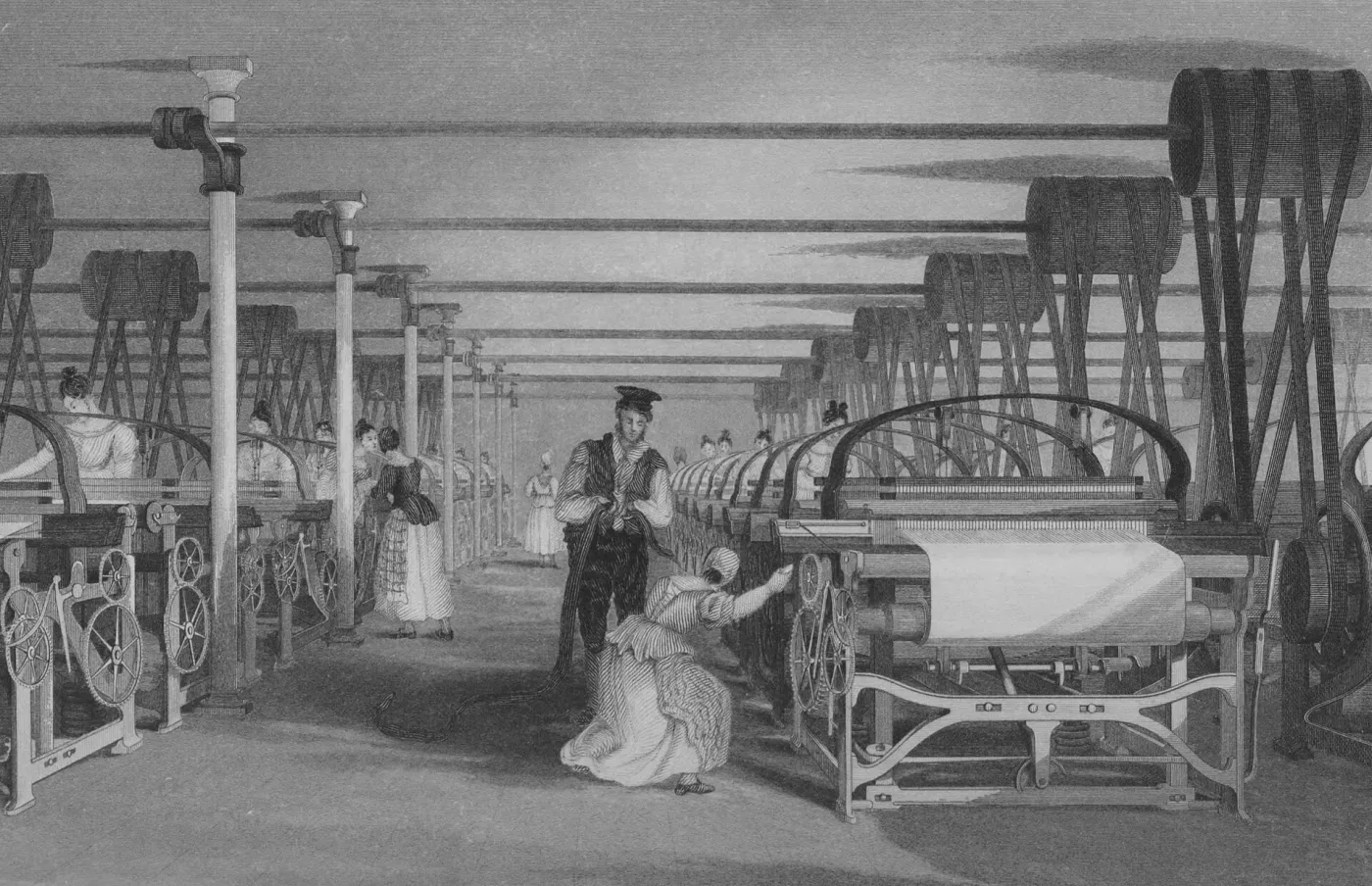
Then the looms got engines. In 1812, fewer than 2,000 power looms operated in Britain; by 1833, there were more than 100,000.1 By 1820, handloom weavers earned 25% less than factory workers,2 and their real wages eventually fell to about a quarter of their peak. The new machines also meant skilled male workers could be replaced by women and children.
In 1842, a 22-year-old Friedrich Engels arrived in Manchester to work at his family’s cotton firm. He spent the next two years walking the city’s streets and wrote The Condition of the Working Class in England about what he saw. A few years later, he and Karl Marx wrote a short pamphlet. Buried in it is this sentence:
“Owing to the extensive use of machinery and to division of labour, the work of the proletarians has lost all individual character, and consequently, all charm for the workman. He becomes an appendage of the machine, and it is only the most simple, most monotonous, and most easily acquired knack, that is required of him.”3
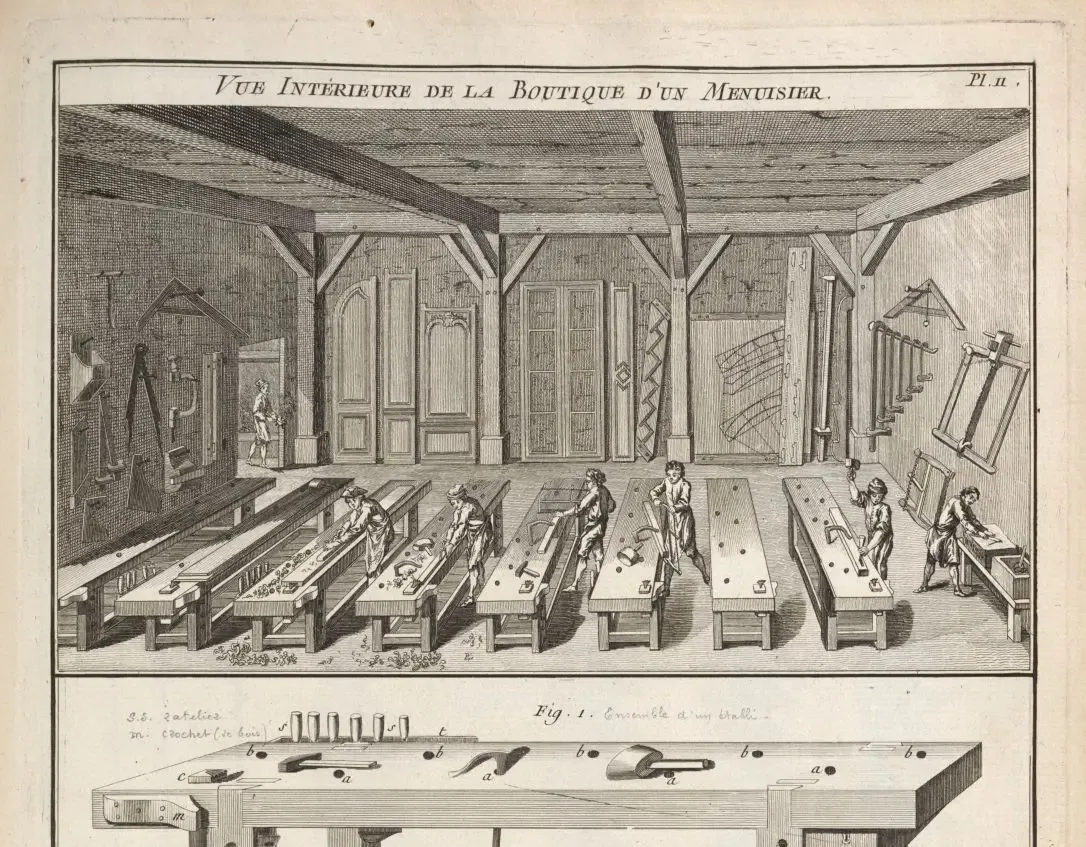
A joiner’s workshop, from André-Jacob Roubo’s L’Art du menuisier (1769–1774).
Read the quote slowly and it’s built like a small machine of its own: two inputs, two losses, one output.
The inputs are machinery and division of labour. Machinery moves the skill out of the person and into the tool; the loom remembers the pattern so the weaver doesn’t have to. Division cuts one job into many small ones, so no one makes the cloth and everyone makes a piece of it.
The losses are character and charm. In the German original, the work loses its selbstständigen Charakter,4 its self-standing character, meaning there’s no longer a finished thing anyone can call theirs. Then, “consequently,” it loses its charm, Reiz: the pull that keeps you leaning in. The order matters. You lose the charm because you lost the character first.
The output is the worker as an appendage, ein bloßes Zubehör der Maschine, a mere accessory, like a part that ships in the box. The only skill left is knack, Handgriff. Literally, that’s a single hand-grip, one motion someone could learn in an afternoon.
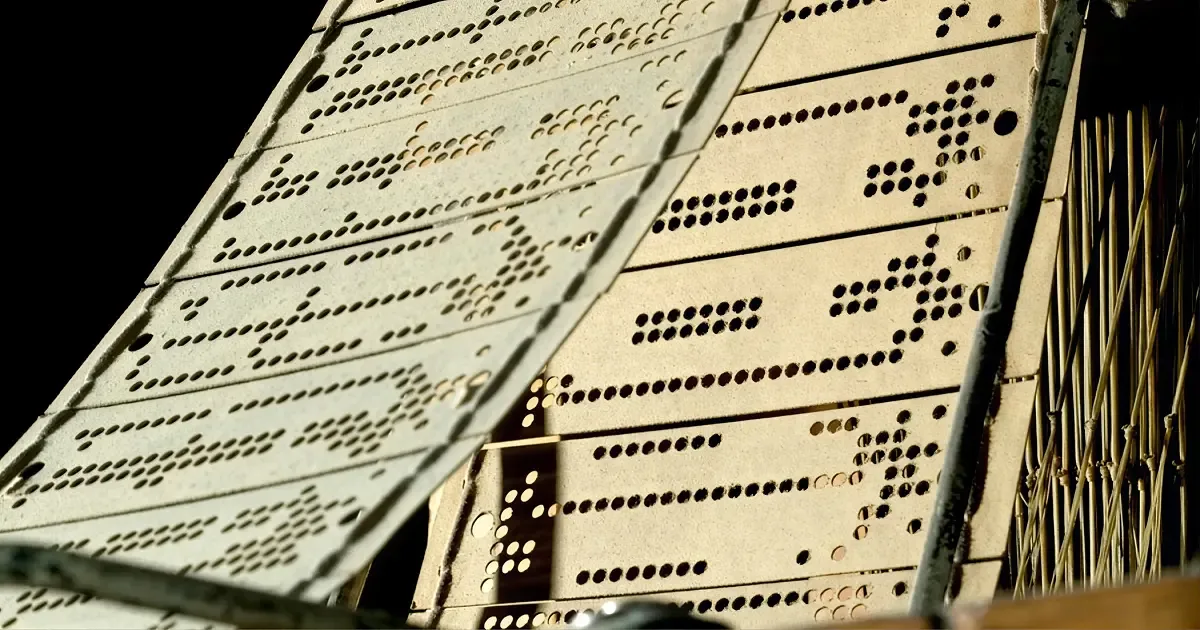
The Analytical Engine weaves algebraical patterns just as the Jacquard-loom weaves flowers and leaves.
It’s easy to see why this quote keeps coming up in conversations about AI. Plenty of creative and technical work now runs in a loop: prompt, review, fix. The tool holds more of the skill every month, and the process breaks the job into smaller pieces.
My point in bringing up this quote isn’t to argue that a language model is a power loom. It’s that the sentence is precise about how the loss happens, and the most important word in it is easy to miss: “and.”
Machinery and division of labour. A powerful tool on its own makes an operator, one person doing a whole job with a lot of help. It’s the tool plus a job chopped into pieces that makes an appendage. Marx and Engels needed both halves for the sentence to work.
In Lancashire, there are museums where you can still watch a room full of looms run. The noise is unbelievable. Visitors film them on their phones, and I’d bet a lot of that footage gets edited with help from an AI.
The machines change, but the sentence still fits.
Footnotes
1Power loom counts: EBSCO Research Starters, “Patenting of the Steam-Powered Loom.”
2Weaver wages and employment: MIT Shaping the Future of Work Initiative, “What can the early industrial revolution teach us about technology and work in the age of AI?”
3Quote from Samuel Moore’s 1888 English translation of the Manifesto of the Communist Party, done in cooperation with Frederick Engels.
4German text from Manifest der Kommunistischen Partei (1848).
The ideas and opinions in this post are mine. Claude helps with research.